FIELD NOTE / AI AUTHORITY
NIVQRA
Human Authority for Autonomous Systems
Authority infrastructure for autonomous systems. A control layer that sits between human intent and machine execution, translating delegated authority into enforceable boundaries.
V0.1 · publish-ready demo environment · simulated lifecycle labelled in-product
Standing
This is an independent I.O.V field note and product thesis. NIVQRA is I.O.V Lab output: it is not client intellectual property and is not owned by any engagement counterparty.
Access says what a system can reach. Authority says what it may do, for whom, within which boundary, at this moment. NIVQRA treats authority as a live control object: scoped, attributable, time-bound where needed, continuously evidenced and revocable.
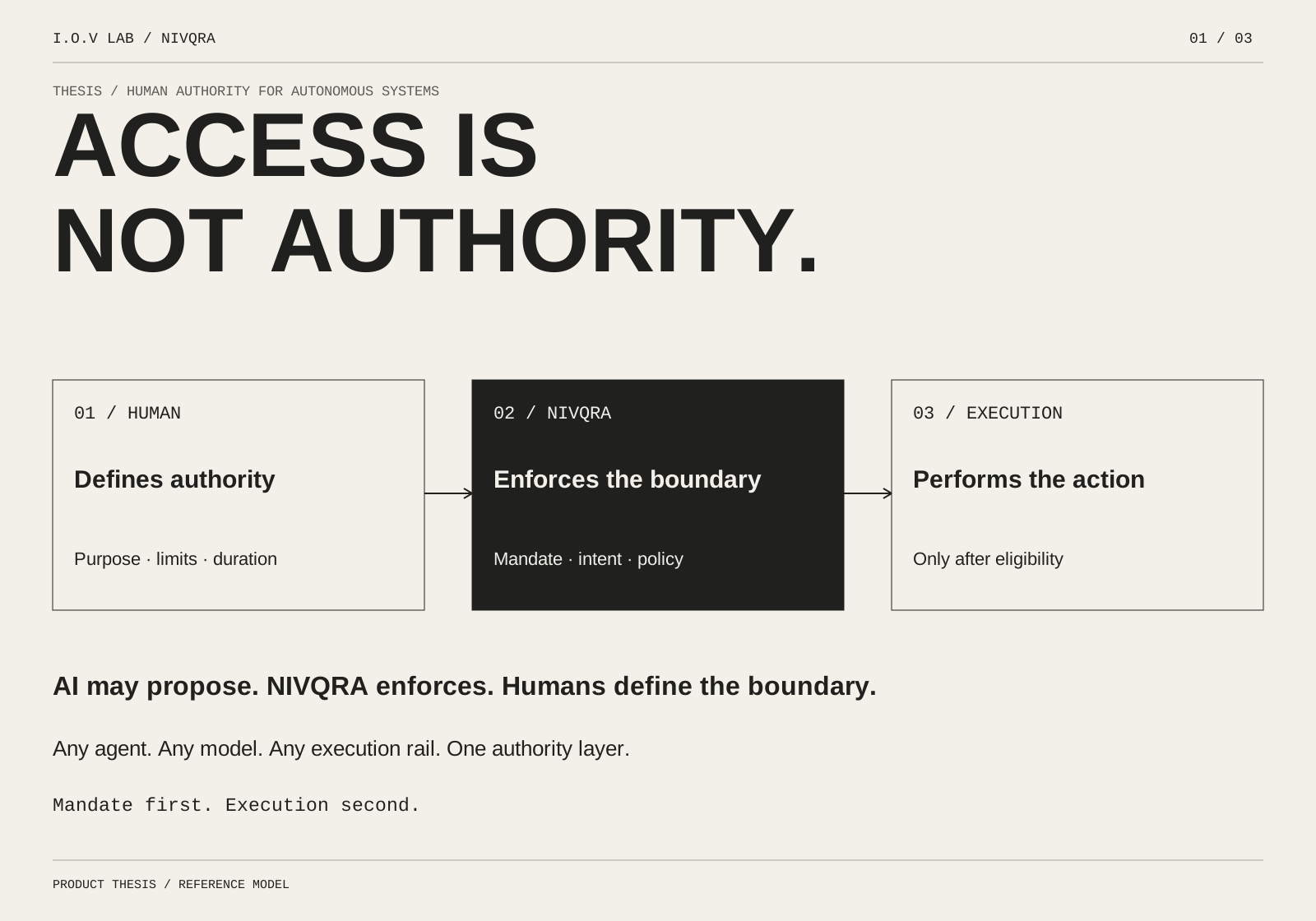
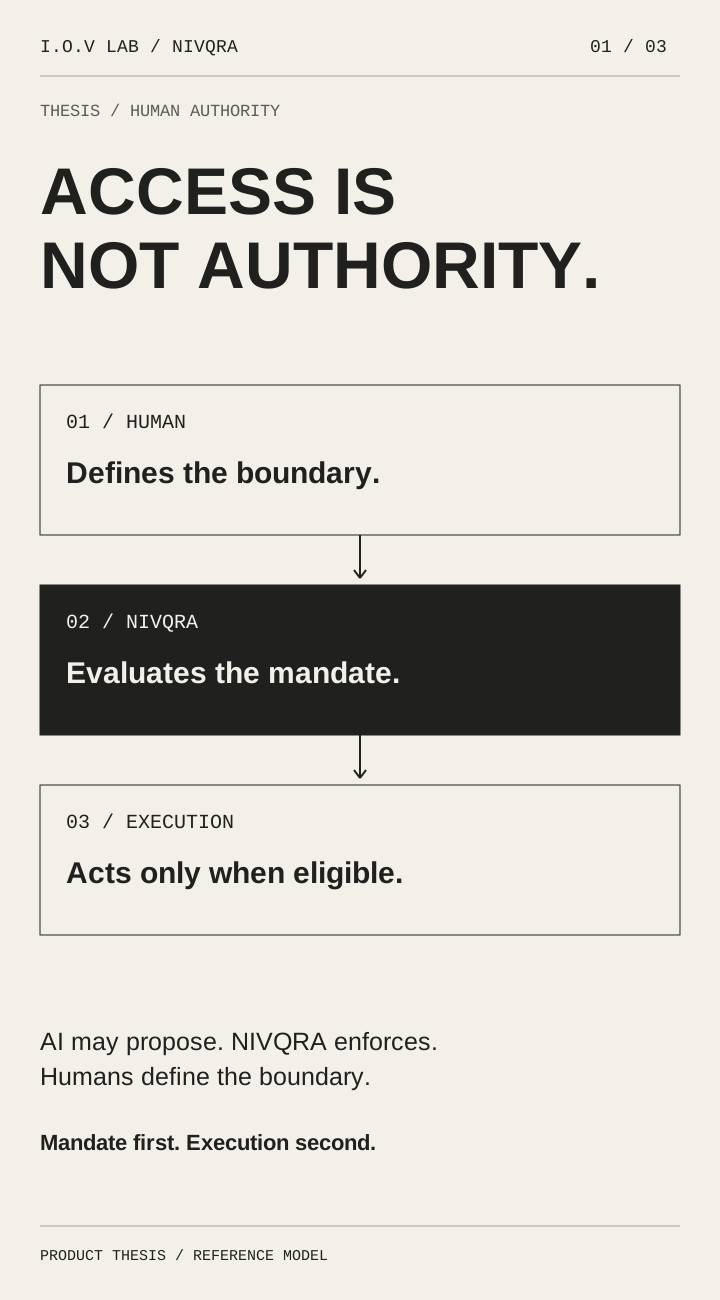
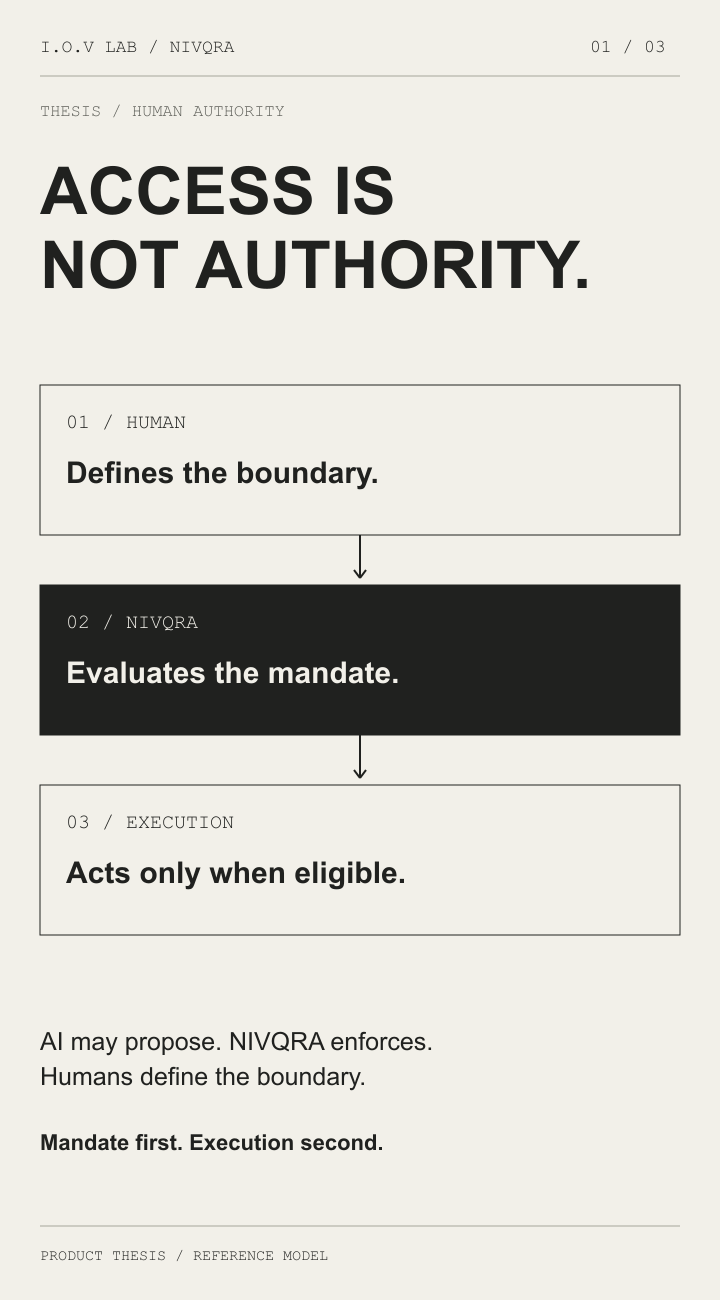
ACCESS IS NOT AUTHORITY.
Access says what a system can reach. Authority says what it may do, for whom, within which boundary, at this moment.
AI systems are moving from producing answers to taking actions. The governance problem changes with them. A credential can prove identity. A permission can open a system. Neither, by itself, proves that an agent is entitled to perform a specific action under a specific human mandate.
NIVQRA treats authority as a live control object: scoped, attributable, time-bound where needed, continuously evidenced and revocable. The product sits between human intent and machine execution, translating delegated authority into enforceable boundaries.
What NIVQRA is — a control plane for delegated machine authority: who may act, under whose mandate, inside which limits, with what evidence and with what path to revoke.
What it is not — not a model, wallet, payment rail, generic IAM product or orchestration framework. It governs the authority those systems exercise.
Agents need authority. They do not need unrestricted access. Every permission defined. Every action attributable. Every authority revocable.
Access is not authority.
Authority must survive the moment of execution.
Traditional controls are strongest before an action starts: login, role, API key, permission. Autonomous systems need control that persists through intent, decision, execution and evidence.
A completed action becomes an Authority Evidence Record rather than a generic log line — instruction, identity, mandate, intent, policy, decision, execution, result, evidence, revoke. NIVQRA reconstructs the chain from the data that exists and explicitly marks anything the demo does not capture. No invented provenance.
Permissions are usually static and resource-centric. Authority is contextual and action-centric. The useful unit is not simply “can this agent call this API?” but “is this action permitted now, under this mandate, within this ceiling, for this counterparty, and can we prove why?”
Mandate before action
The boundary is declared before execution, not inferred after it.
Decision before effect
Policy and human exception routing sit in front of execution.
Evidence after effect
The action remains attributable, exportable and revocable.
AI may propose. NIVQRA enforces. Humans define the boundary.
Autonomy should be earned inside a boundary.
NIVQRA models autonomy as a maturity state, not a risk score. The question is not whether an agent is “safe” in the abstract. It is how much authority has actually been delegated and under what evidence.
Just-in-time authority: minimum authority, at the moment needed. V0.1 demonstrates a temporary grant for a procurement action — one action, 15 minutes, EUR 200 maximum, labelled simulated. The grant is consumed or expires. No standing credential is created.
Standards-neutral connector posture. The architecture is designed to sit above heterogeneous agent, model and transaction surfaces without claiming integrations that are not live: MCP, A2A and AP2 are architecture-ready; x402 is a future connector; internal API and payment rail are simulated. Any agent. Any model. Any rail. One authority layer.
OBSERVE
Propose and record intent. No execution.
APPROVE
Act after named human approval.
BOUND
Act inside hard limits. Escalate exceptions.
AUTONOMIZE
Act within mandate with evidence and revocation.
Minimum authority. At the moment needed.
Control without freezing the machine.
The value of authority infrastructure is not more approval. It is the ability to reduce approval safely as trust, boundaries and evidence improve.
I.O.V implication: the agentic economy does not only need better models. It needs a constitutional layer for delegation — a way to convert human intent into machine authority without turning every action into a meeting or every credential into a blank cheque.
Product status: V0.1 product pass complete, publish-ready demo environment. Simulated lifecycle and connector posture are labelled in-product. No claim of live x402, payment rail or external credential execution.
Deterministic enforcement
The same governed request produces the same policy outcome.
Least authority
Give the smallest scope required to perform the action.
Explicit mandate scope
Purpose, category, counterparty and limits are declared.
Hard limits
Budget and per-action ceilings are not advisory.
Resource controls
Non-approved resources do not clear by default.
Idempotent execution
One approved intent should produce one effect.
Human exception routing
Outside the boundary routes to a named person.
Full attribution
Principal, agent and deciding human remain visible.
Evidence exports
The authority chain can leave the interface with the record.
Immediate revocation
Authority can be withdrawn and the withdrawal recorded.
Publication disclosure
This is an independent I.O.V Strategic Intelligence Studio field note and product thesis. NIVQRA is built by the I.O.V Lab; it is not client intellectual property and is not attributable to any engagement counterparty.
V0.1 is a publish-ready demo environment. Simulated lifecycle steps and connector posture are labelled in-product. No live x402, payment-rail or external-credential execution is claimed.
This publication does not constitute legal, regulatory, security or investment advice.
Reading the same field for a decision of your own?
Research is published openly. Engagements are private: a defined decision, read with the same discipline, ending in a first proof.